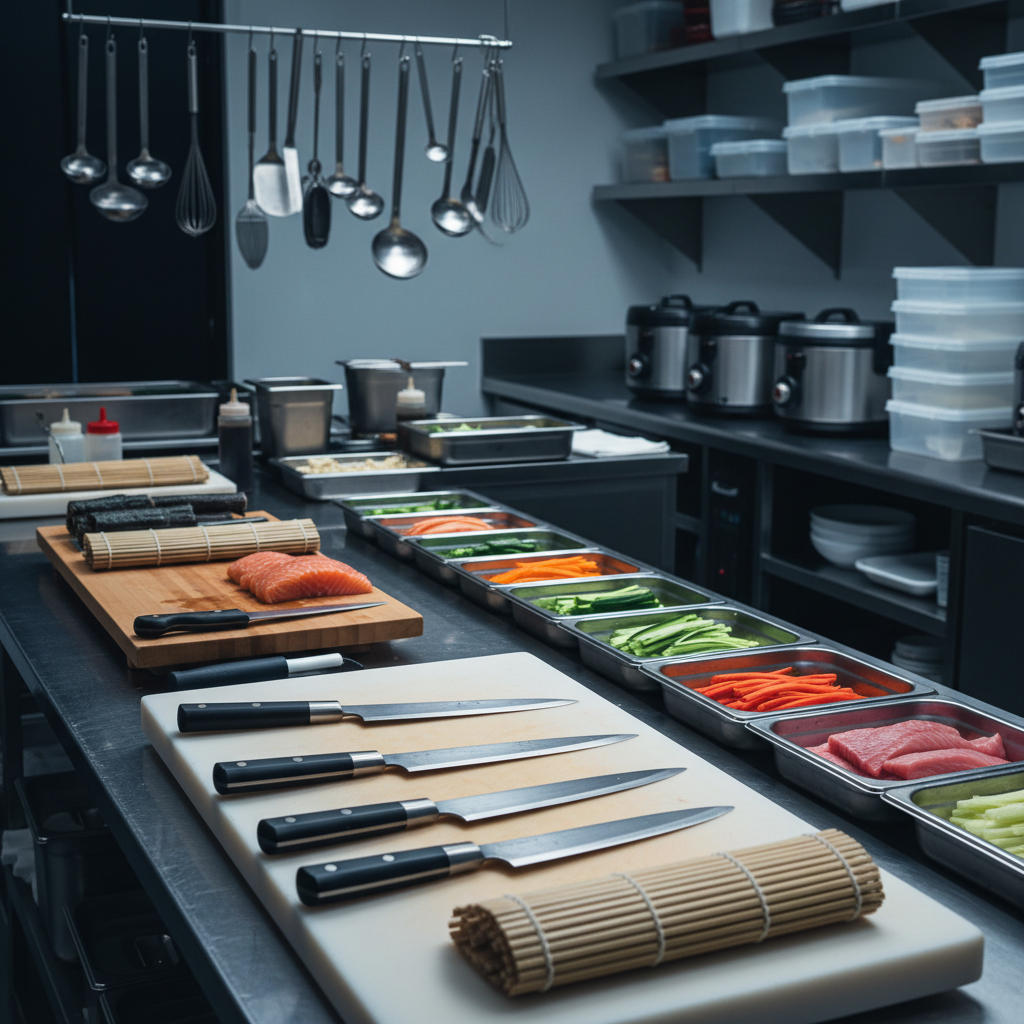
A stainless-steel professional sushi workstation viewed from a slightly elevated angle, set up for recruitment visuals. On the clean counter sit razor-sharp Japanese knives with polished blades, a water-soaked bamboo cutting board, neatly rolled bamboo sushi mats, and trays of perfectly julienned vegetables and glistening fish fillets. In the background, an organized array of hanging utensils, rice cookers, and storage containers hints at a high-standard kitchen in a Texas Japanese restaurant. Cool, bright overhead lighting emphasizes cleanliness and precision, casting crisp shadows and subtle reflections on metal surfaces. Photographic realism, balanced composition with sharp focus, conveying an efficient, professional workspace that suggests opportunity for skilled sushi chefs without showing any human figures.

Our Story

Connecting Texas and Japan through authentic cuisine, shared hospitality, and opportunities for rising sushi talent.

About

New Hope Kokusai USA brings Japanese culinary craftsmanship to Texas, blending seasonal ingredients, thoughtful service, and community events that honor both cultures while mentoring sushi chefs from Dallas, Houston, Austin, and Japan.
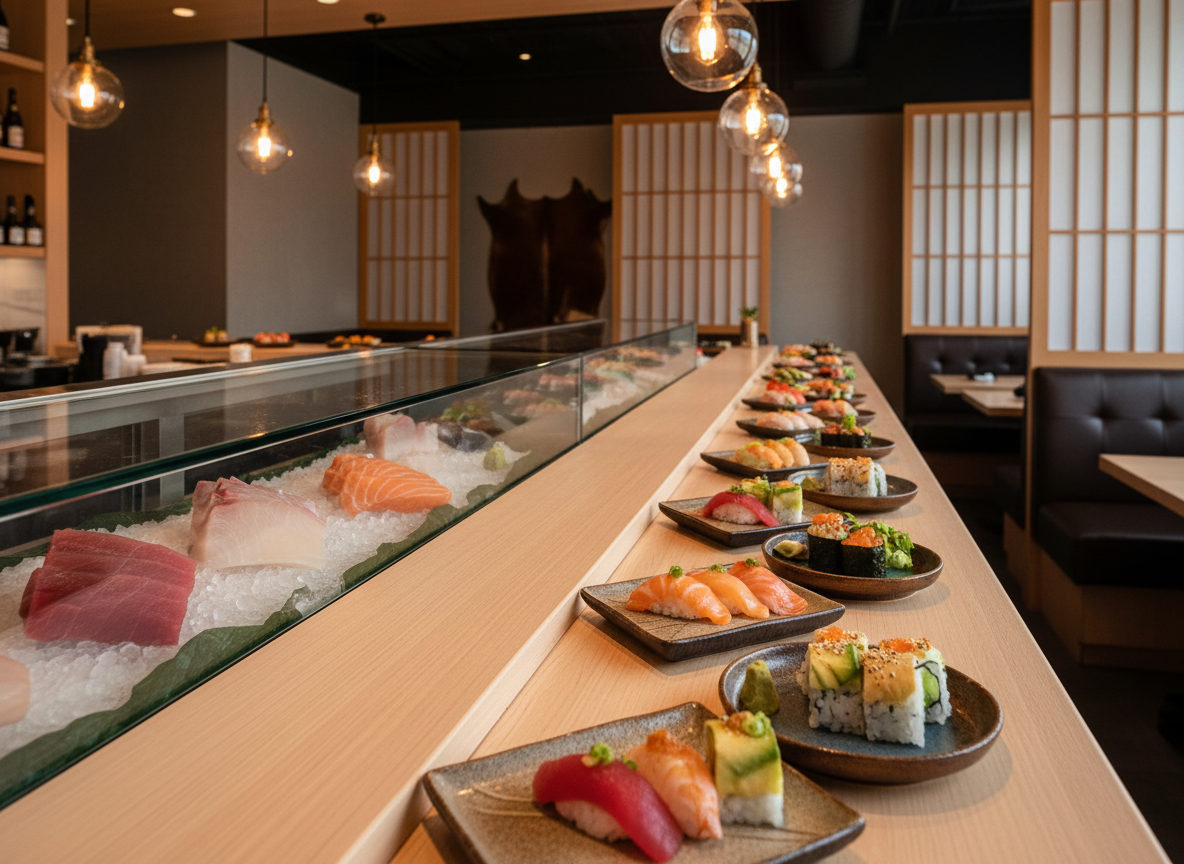
A long, elegant sushi bar of pale blond wood stretches through a contemporary Japanese restaurant interior, with precisely arranged ceramic plates displaying colorful nigiri and delicate maki rolls. Behind the bar, a spotless glass-fronted refrigerated display showcases gleaming cuts of tuna, salmon, and seasonal fish on crushed ice. Warm pendant lights cast a soft golden glow across the counter, reflecting subtly in the polished surface. In the background, slightly out of focus, minimalist decor combines Texas touches like dark leather seating with Japanese shoji-inspired wall panels. Photographic realism, eye-level composition, inviting and professional mood, with shallow depth of field that keeps the sushi bar in crisp focus and the dining area gently blurred.

Our Chefs

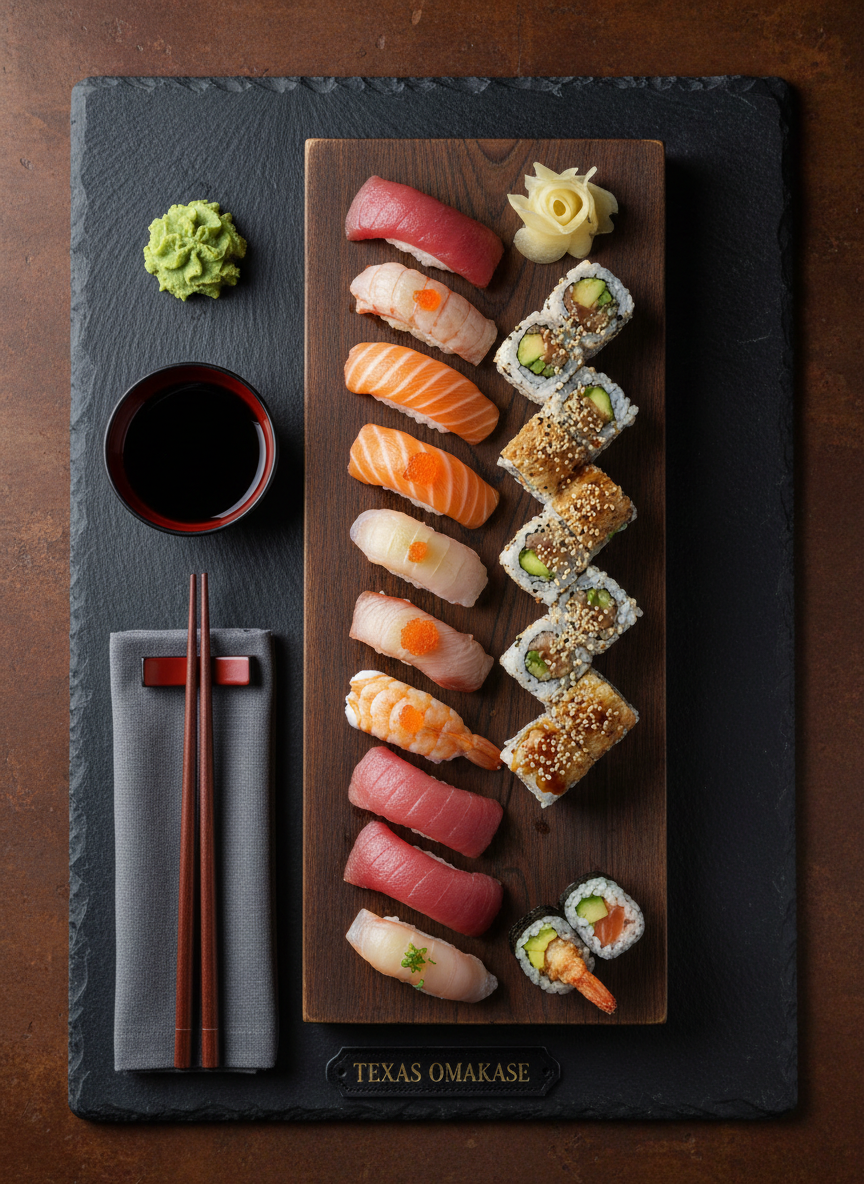
An overhead view of a meticulously arranged omakase-style sushi platter on a dark slate tabletop, featuring shimmering slices of toro, salmon, and yellowtail nigiri, artfully rolled maki, and a small mound of freshly grated wasabi. Beside the platter rests a lacquered soy sauce dish and a pair of smooth, dark wooden chopsticks parallel to a folded linen napkin. Soft, diffused studio lighting from above creates subtle highlights on the fish and gentle shadows along the slate’s texture. The mood is refined and luxurious, evoking premium Japanese dining in Texas. Photographic realism, crisp focus across the entire frame, with the composition centered and balanced to function as a sophisticated menu preview image.

Aarav Sharma

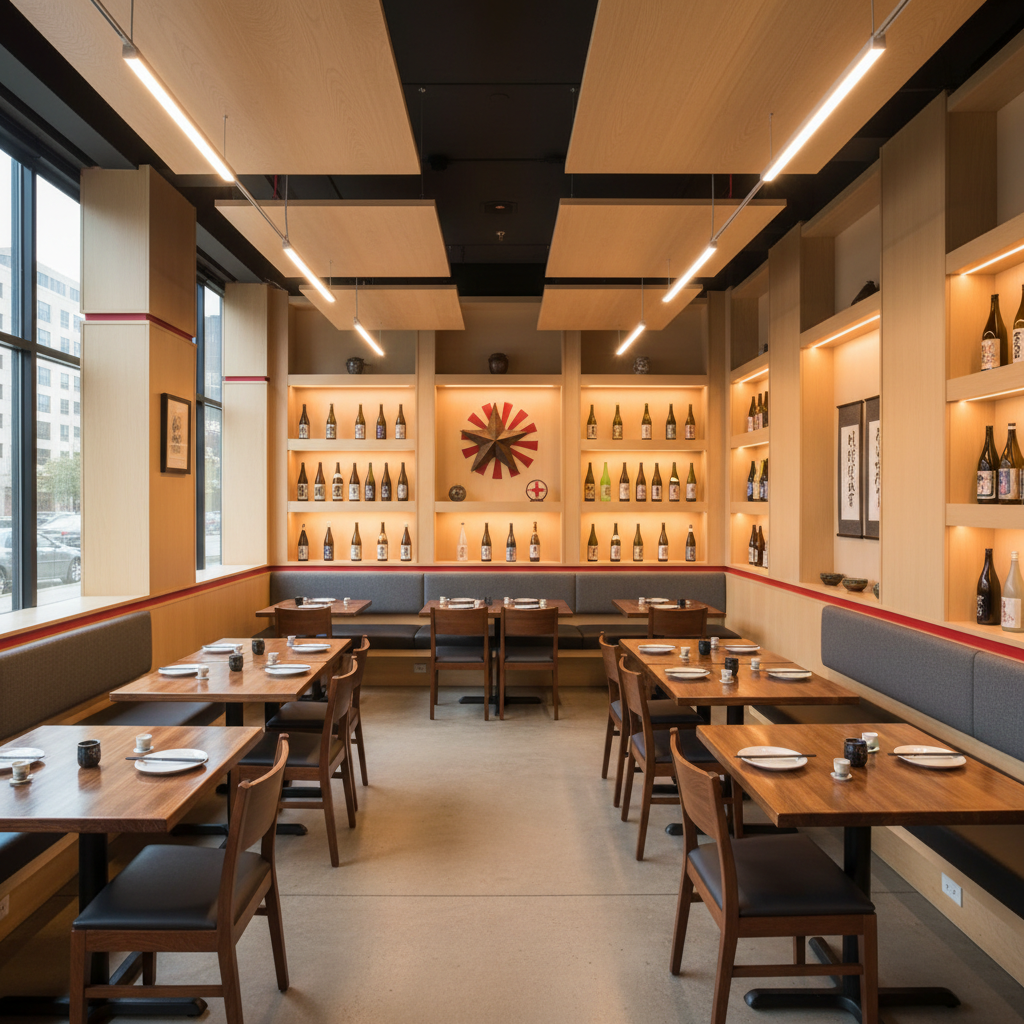
A wide interior shot of a modern Japanese restaurant in Texas, with clean lines and a harmonious blend of natural wood, muted gray tones, and discrete red accents. Low wooden tables with dark upholstered seating are neatly set with white porcelain plates and minimalist chopstick rests. Along the back wall, illuminated shelving displays ceramic sake bottles and subtle cultural artifacts symbolizing Japan–USA connection, such as a small abstract sculpture combining a star and a rising sun motif. Warm ambient lighting from recessed ceiling fixtures creates a calm, welcoming glow. Photographic realism, eye-level perspective, sharp focus throughout, conveying a professional yet inviting atmosphere suitable for families, business diners, and cultural gatherings.

Mateo García

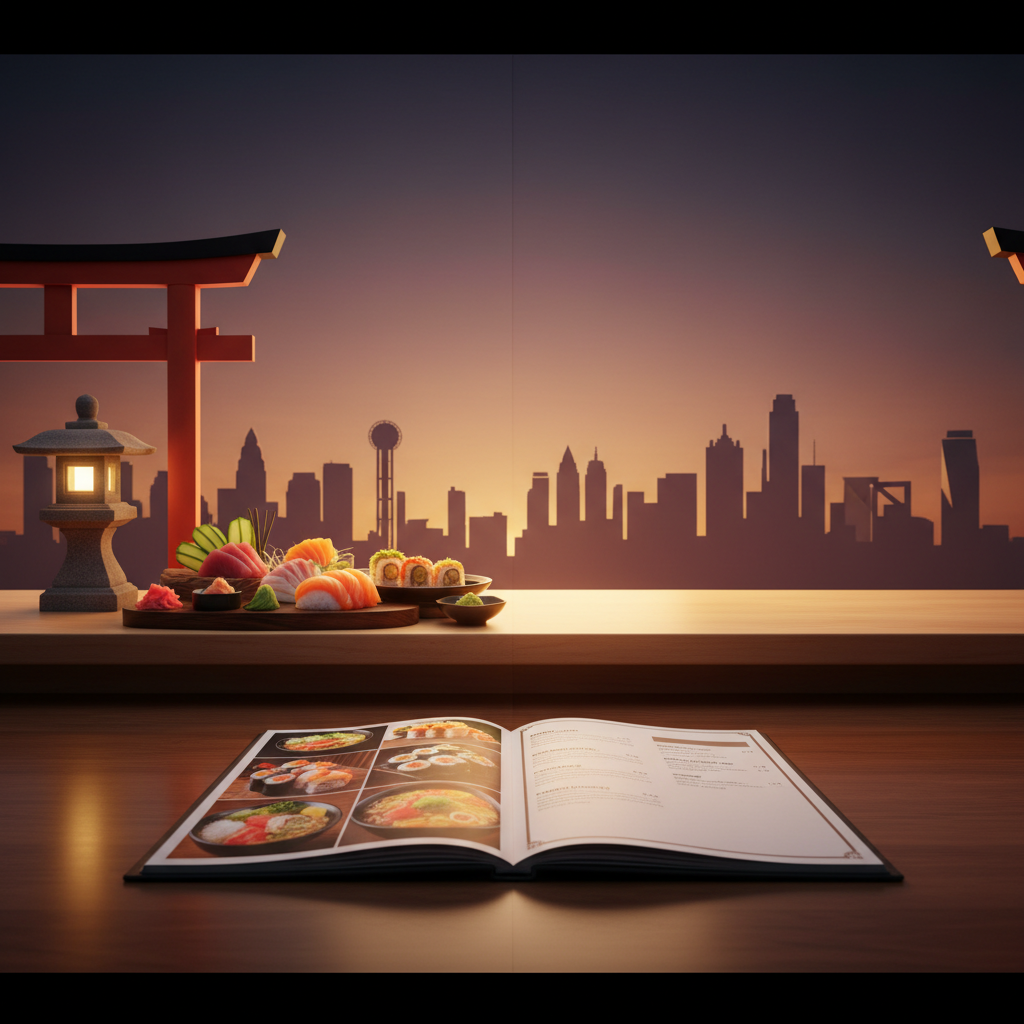
A split-environment concept image showing a seamless cultural bridge between Japan and Texas, portrayed without people. On the left, a traditional Japanese street lantern and a small torii-inspired wooden frame stand beside a display of sushi ingredients on a wooden counter. On the right, a stylized Texas skyline silhouette with recognizable skyscraper shapes hints at Dallas, Houston, and Austin against a subtly glowing evening sky. In the center foreground, a polished wooden table holds an open menu featuring close-up photos of sushi, ramen, and donburi, though the page text is not legible. Gentle, warm lighting ties both sides together, with photographic realism and a wide, cinematic composition that feels aspirational, modern, and culturally connected.

Zuri Ndlovu

Voices

A stainless-steel professional sushi workstation viewed from a slightly elevated angle, set up for recruitment visuals. On the clean counter sit razor-sharp Japanese knives with polished blades, a water-soaked bamboo cutting board, neatly rolled bamboo sushi mats, and trays of perfectly julienned vegetables and glistening fish fillets. In the background, an organized array of hanging utensils, rice cookers, and storage containers hints at a high-standard kitchen in a Texas Japanese restaurant. Cool, bright overhead lighting emphasizes cleanliness and precision, casting crisp shadows and subtle reflections on metal surfaces. Photographic realism, balanced composition with sharp focus, conveying an efficient, professional workspace that suggests opportunity for skilled sushi chefs without showing any human figures.

Hope D.

The sushi in Dallas tastes exactly like what I remember from Tokyo—fresh, precise, and beautifully presented with kind, attentive service.

A long, elegant sushi bar of pale blond wood stretches through a contemporary Japanese restaurant interior, with precisely arranged ceramic plates displaying colorful nigiri and delicate maki rolls. Behind the bar, a spotless glass-fronted refrigerated display showcases gleaming cuts of tuna, salmon, and seasonal fish on crushed ice. Warm pendant lights cast a soft golden glow across the counter, reflecting subtly in the polished surface. In the background, slightly out of focus, minimalist decor combines Texas touches like dark leather seating with Japanese shoji-inspired wall panels. Photographic realism, eye-level composition, inviting and professional mood, with shallow depth of field that keeps the sushi bar in crisp focus and the dining area gently blurred.

Hope D.

Houston’s location feels like stepping into Japan; the chefs explain each course, and the omakase menu keeps surprising us every visit.

An overhead view of a meticulously arranged omakase-style sushi platter on a dark slate tabletop, featuring shimmering slices of toro, salmon, and yellowtail nigiri, artfully rolled maki, and a small mound of freshly grated wasabi. Beside the platter rests a lacquered soy sauce dish and a pair of smooth, dark wooden chopsticks parallel to a folded linen napkin. Soft, diffused studio lighting from above creates subtle highlights on the fish and gentle shadows along the slate’s texture. The mood is refined and luxurious, evoking premium Japanese dining in Texas. Photographic realism, crisp focus across the entire frame, with the composition centered and balanced to function as a sophisticated menu preview image.

Hope D.

We brought clients to the Austin restaurant and they were blown away by the balance of authentic flavors, calm atmosphere, and professionalism.

A wide interior shot of a modern Japanese restaurant in Texas, with clean lines and a harmonious blend of natural wood, muted gray tones, and discrete red accents. Low wooden tables with dark upholstered seating are neatly set with white porcelain plates and minimalist chopstick rests. Along the back wall, illuminated shelving displays ceramic sake bottles and subtle cultural artifacts symbolizing Japan–USA connection, such as a small abstract sculpture combining a star and a rising sun motif. Warm ambient lighting from recessed ceiling fixtures creates a calm, welcoming glow. Photographic realism, eye-level perspective, sharp focus throughout, conveying a professional yet inviting atmosphere suitable for families, business diners, and cultural gatherings.

Hope D.

As a Japanese American, I appreciate how respectfully New Hope Kokusai celebrates tradition while still welcoming Texas friends to explore new dishes.